
Emergency and exit lighting isn’t just a compliance requirement, it’s a critical safety system designed to guide people out of a building when visibility is compromised. Whether it’s a power failure or an emergency situation, these systems need to perform without hesitation.
In Australia, the standard that governs all emergency lighting systems is AS/NZS 2293, which is referenced by the National Construction Code and forms part of your legal obligations as a building owner or operator.
What Is AS/NZS 2293?
AS/NZS 2293 is a set of standards that covers the full lifecycle of emergency lighting systems, from installation through to ongoing maintenance. It’s divided into three key parts:
- System design, installation, and operation
- Routine inspection and maintenance
- Performance requirements for emergency lights and exit signs
Together, these ensure your system is installed correctly, performs as expected, and continues to operate reliably over time.
Where Is Emergency Lighting Required?
In general, you’ll need compliant emergency lighting in areas such as:
- Stairwells and fire-isolated exits
- Hallways and escape routes
- Large open areas and commercial spaces
- Locations where natural light is insufficient
- Exit signs must also be clearly visible and positioned along evacuation paths, especially where direction changes occur.
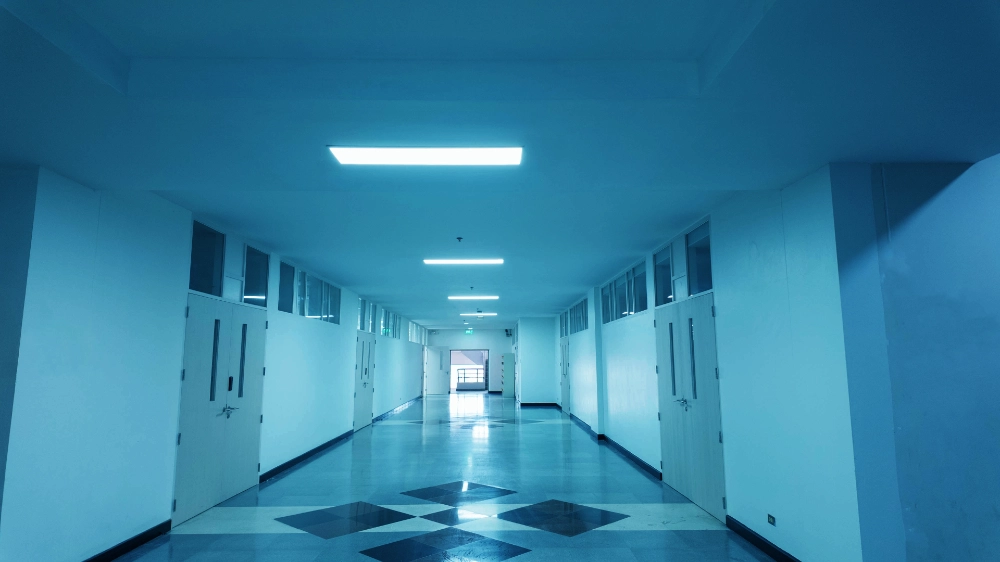
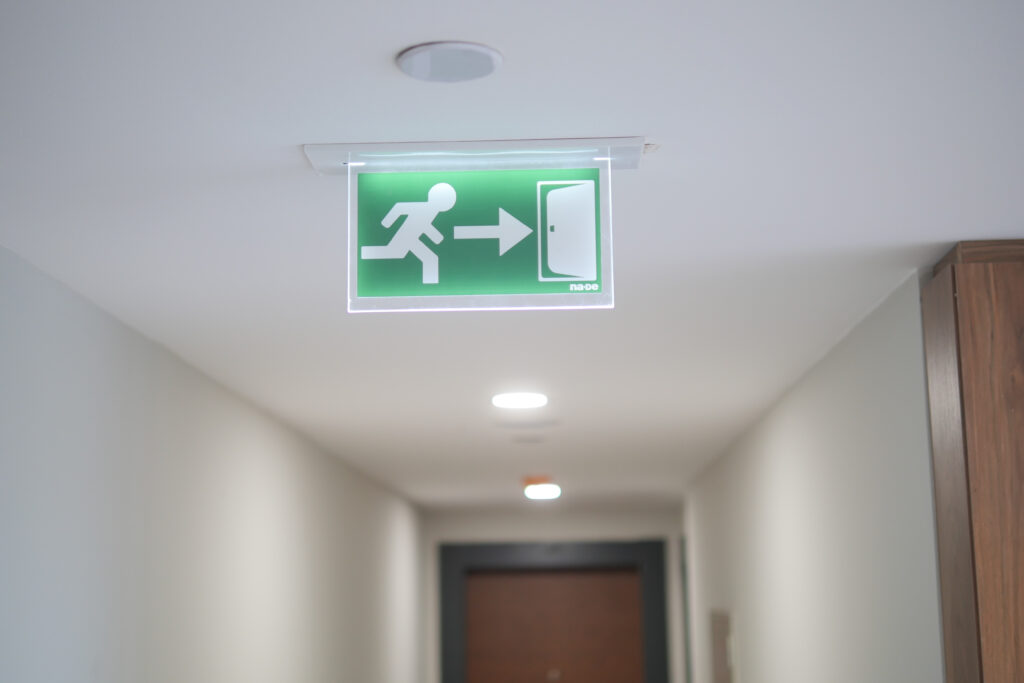
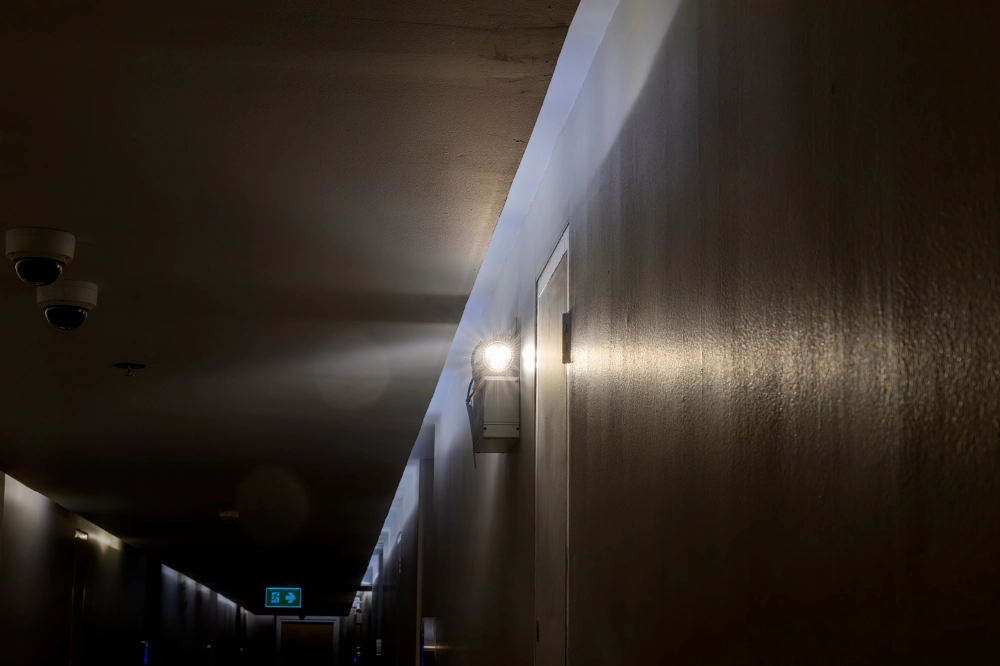
Key Design and Installation Requirements for Emergency Lighting compliance in Australia
To meet compliance, emergency lighting systems must be designed to maintain visibility along escape paths during a power outage. This includes:
- Providing sufficient illumination along exit routes
- Ensuring consistent light levels without dark spots
- Positioning exit signs at the correct height and in clear view
- Using compliant fittings that meet Australian performance standards
Installations can follow standard spacing guidelines or be designed using lighting calculations; both approaches aim to achieve safe, reliable visibility during an emergency.
Testing and Maintenance Requirements
Emergency Lighting Compliance doesn’t stop after installation — ongoing testing is mandatory to ensure your system will work when needed. Typical requirements include: 6-monthly testing: Full discharge test to confirm battery performance Annual servicing: Inspection, cleaning, and system check Ongoing monitoring: Identifying faults and replacing failed components These regular checks are essential, as battery systems can degrade over time and may fail without warning.
Emergency Lighting Logbooks
Keeping accurate records is a key part of compliance. A logbook should be continually updated and include:
- Testing dates and results Identified faults
- Repairs and maintenance completed
- Details of each fitting and its location
Why Compliance with AS/NZS 2293 matters
Failing to meet emergency lighting standards can lead to:
- Failed safety inspections
- Increased liability in an emergency
- Insurance complications
- Potential fines or enforcement action
- More importantly, it puts occupants at risk
How KORLEC helps with emergency lighting in businesses of any size
Managing emergency lighting compliance can quickly become time-consuming, especially across multiple properties or tenancies. KORLEC takes care of the entire process, including:
- Scheduled testing and maintenance
- Fault reporting and repairs
- Logbook management
- System upgrades where required
We keep everything running smoothly behind the scenes, so you don’t have to chase compliance deadlines or worry about missed requirements.
If you’re unsure whether your system meets current standards, get in touch with us for a full review.